Street Tree Initiative

The Homeland neighborhood has long been defined by its distinctive tree-lined streets, leafy avenues, and the verdant landscape that has shaped community life for generations. Yet, like many historic neighborhoods, our urban forest has gradually diminished over the past century due to aging trees, environmental pressures, and natural loss.
A street tree audit conducted by the Homeland Community Foundation revealed that our thinning canopy is missing more than 650 trees from the original landscape vision of the Olmsted Brothers. These trees are more than a defining feature of our neighborhood's character—they provide critical shade, reduce stormwater runoff, cool our streets, improve air quality, and create habitat for wildlife.
In honor of Homeland's centennial in 2024, the Homeland Community Foundation launched the Street Tree Initiative to help restore and strengthen our tree canopy for future generations.
If you'd like to be part of this initiative, you can sign up to have a new street tree planted at your home—at no cost to you.
All we ask in return is that you help your tree thrive during its first few years through regular watering and simple care as it takes root in our community.
Street Tree Species
Our street tree initiative to reestablish a shade canopy over the Homeland neighborhood will draw from the following collection of native tree species. They are well-suited as large urban street trees and offer aesthetic interest via the canopy structure, leaf color, and bark texture. In addition, they are tolerant of air pollution, contribute to urban heat reduction, help prevent runoff, and provide shelter from the sun.

American Sycamore
Platanus occidentalis
The American Sycamore is a majestic, fast-growing native shade tree that brings beauty, resilience, and ecological benefits to urban environments. Its striking, peeling bark, cooling canopy, and adaptability make it a timeless and practical choice for wide streets and public green spaces.
American Elm
Ulmus americana
The American Elm is a large, fast-growing native shade tree prized for its graceful vase-shaped form and wide, arching canopy. Reaching 60 to 80 feet tall, it provides valuable habitat and food for wildlife, including spring-foraging birds, small mammals, and nesting Baltimore orioles.
Honeylocust
Gleditsia triacanthos
The Honeylocust is a fast-growing native shade tree valued for its airy canopy, dappled shade, and exceptional tolerance of urban conditions, drought, and salt. Typically reaching 30 to 70 feet tall, it can grow 2 to 3 feet per year during its early years, making it an excellent choice for quickly adding shade and beauty to the landscape.
Red Maple
Acer rubrum
The Red Maple is a fast-growing, adaptable shade tree known for its vibrant red color throughout the seasons and brilliant fall foliage. With a rounded to oval canopy, it typically reaches 40 to 90 feet tall and grows approximately 12 to 18 inches per year.
Swamp White Oak
Quercus bicolor
The Swamp White Oak is a stately native shade tree that typically grows 50 to 70 feet tall, with a broad, rounded canopy that provides excellent shade. Known for its distinctive ridged bark, balanced form, and attractive foliage, it also offers important environmental benefits, including carbon sequestration, stormwater management, and improved air quality.
Sweetgum
Liquidambar styraciflua
The Seedless Sweetgum is a large, deciduous shade tree that offers the classic star-shaped foliage and vibrant fall color of traditional Sweetgums without the nuisance of spiky seed pods. Growing 50 to 75 feet tall with an open, pyramidal canopy, it is a moderately fast-growing tree, typically adding 2 to 3 feet of height per year, making it well suited for residential landscapes.
Southern Red Oak
Quercus falcata
The Southern Red Oak is a large, hardy native shade tree known for its distinctive deeply lobed leaves, broad rounded canopy, and ability to thrive in dry, challenging soils. Reaching 60 to 80 feet tall with a spread of 40 to 50 feet, it provides excellent shade, supports local wildlife, and can live for 150 to 200 years, making it a lasting investment in the landscape.
Sugar Maple
Acer saccharum
The Sugar Maple is a large, long-lived native shade tree prized for its brilliant fall display of yellow, orange, and fiery red-orange foliage. Growing to a mature height of 60 to 75 feet with a broad, rounded canopy, it adds lasting beauty and shade to the landscape. Known for its strong wood and the sweet sap used to produce maple syrup, Sugar Maples grow steadily at about one foot per year as they become established and can thrive for generations.
Willow Oak
Quercus phellos
The Willow Oak is a fast-growing, long-lived shade tree valued for its graceful, willow-like leaves, full canopy, and elegant, uniform appearance. Reaching 40 to 100 feet tall, it provides abundant shade, adapts well to urban environments, and supports local wildlife through its acorn production. Once established, Willow Oaks typically grow 1 to 2 feet per year and can develop into a substantial shade tree within 10 to 15 years.
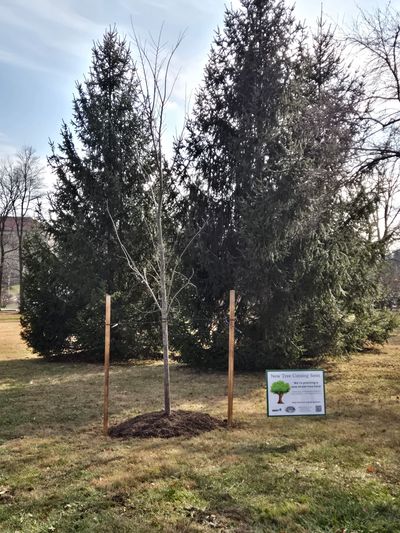
Fall 2025 + Spring 2026
The first phase of planting took place in Fall 2025 with the addition of 27 new street trees, followed by 14 more trees in Spring 2026. As Homeland enters its second century, this initiative represents an investment in the neighborhood's beauty, environmental health, and long-term vitality.

🌳 Help Restore Homeland’s Canopy
Homeland has lost more than 650 street trees over the years—leaving gaps in our canopy and our community’s beauty. The Homeland Community Foundation is working to replant, restore, and renew, but we can’t do it alone.
Be part of Homeland’s next 100 years.